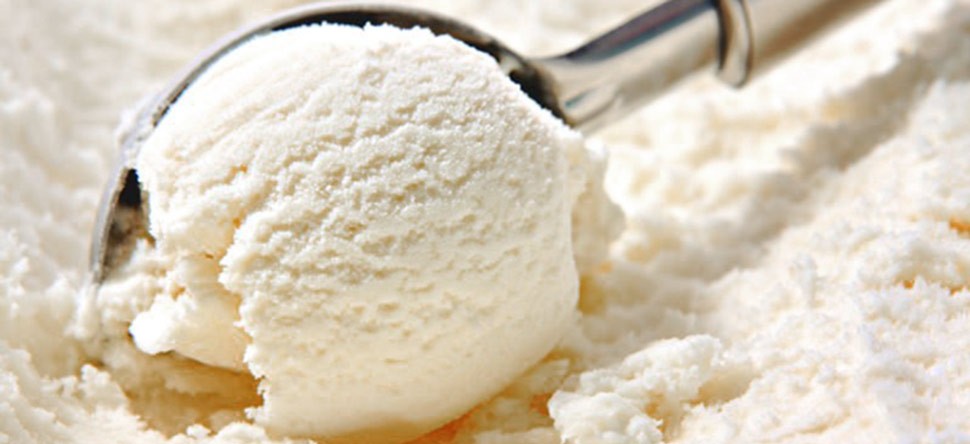
I like vanilla. It’s one of my favourite flavours and/or scents. Maybe I’m strange, but I think it’s the best of them all. Why, you may ask? Well, it’s because vanilla is simple. It’s the generic of of the flavours, as well as the easiest mechanism to tempt your tastebuds with mouth-watering goodness. Vanilla is unpretentious, subtle, easy-going, and easy-to-get-along-with. It’s not flamboyant like Rocky Road or triple fudge, nor overly sweet like caramel or maple walnut; neither is it in-your-face like raspberry chocolate. Vanilla just is…
It only takes a drop or two of vanilla to flavour your favourite ice cream, cake or coffee. There’s no need to overdo it.
This makes vanilla the flavour that many other flavours are made of—those cookies and cream ice creams—vanilla at the core. Neapolitan—1/3 vanilla. Any ripple ice cream? Yeah, you got it now.
I like vanilla with writing too. Reading a story shouldn’t be complex. It shouldn’t hurt your brain or make you keep flipping back to some other page or chapter to try and figure out what’s going on. It should just flow from one event to another without confusion or questions.
This is particularly true in the fiction genre. Some people use many fancy words and phrases to try and present an idea, or perhaps in setting in a scene, but are all those unrestrained words truly necessary? Does making your reader have to consult the dictionary really create progress in the story line? I think not. Sometimes too much butterscotch in the ripple can actually cause your reader to put your book down, because they suddenly have to meditate for an hour over the last thirty lines of the page.
While that may get some folks closer to God, it isn’t going to keep your reader on the edge of their seats.
Now don’t get me wrong. I’m not saying that complexity is a bad thing. Complex plots and interactions give your reader a puzzle to have to solve. That’s part of what engages a reader, making them want to read more so they can fit that next piece in. Three-dollar words can also be used—as long as they are given in such context in the sentence that allows anyone to understand its meaning.
However, avoid the mistake of making the thesaurus the go-to book when writing. Language, indeed story-telling, is supposed to be easy to read. It should have a cadence—a heartbeat. The rise and fall of the characters at their best and their worst should be memorable, without all the fluff of four syllable words. The more you pollute the simple flavour of the basic taste, the more difficult it will be to sample the exquisite simplicity of the tale you tell.
Perhaps I am just saying follow the rule of K.I.S.S. (Keep It Simple, Silly) with just a few more words.
But then, I like words.